DeepSeek LeetCode 151. 反转字符串中的单词 Rust实现
·
解题思路
Rust 的 split_whitespace() 会按任意空白字符分割字符串,并自动忽略前导、尾随空格以及连续多个空格。
因此只需要:
- 用 split_whitespace() 得到所有单词
- 反转迭代器
- 用单个空格 " " 连接
代码实现
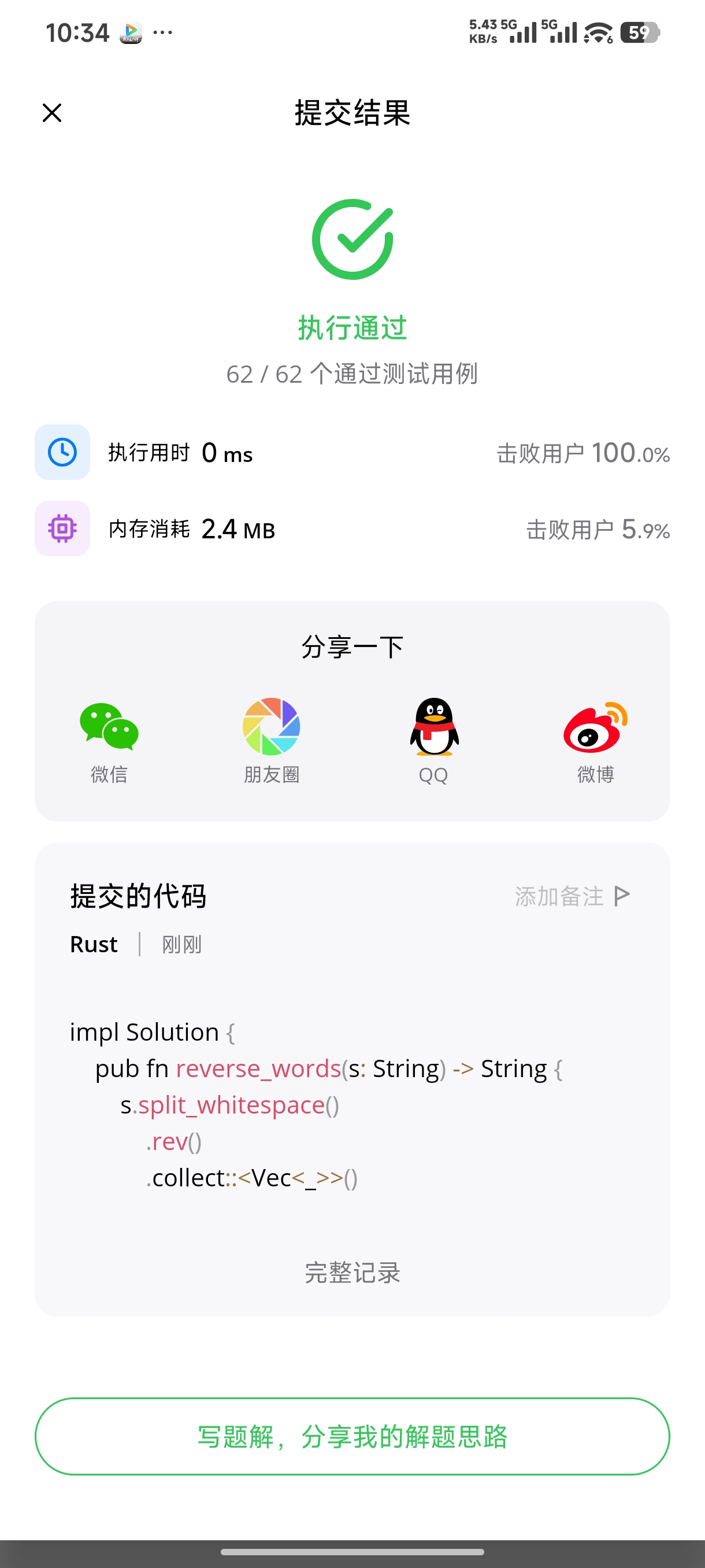
impl Solution {
    pub fn reverse_words(s: String) -> String {
        s.split_whitespace()
            .rev()
            .collect::<Vec<&str>>()
            .join(" ")
    }
}
如果不想显式指定 Vec<&str>,也可以写成:
impl Solution {
    pub fn reverse_words(s: String) -> String {
        s.split_whitespace()
            .rev()
            .collect::<Vec<_>>()
            .join(" ")
    }
}
关键点说明
要点 说明
split_whitespace() 自动处理前导、尾随、连续空格,比 split(’ ') 更简洁且正确
rev() 反转单词顺序
collect::<Vec<_>>() 将迭代器收集为 Vec<&str>,因为 join 需要切片
join(" ") 用单个空格连接单词,返回新的 String
复杂度分析
· 时间复杂度:O(n),遍历字符串一次
· 空间复杂度:O(n),存储单词列表和结果字符串
示例验证
// 输入: "the sky is blue"
// split_whitespace: ["the", "sky", "is", "blue"]
// rev:              ["blue", "is", "sky", "the"]
// join:             "blue is sky the"

// 输入: "  hello world  "
// split_whitespace: ["hello", "world"]
// rev:              ["world", "hello"]
// join:             "world hello"

// 输入: "a good   example"
// split_whitespace: ["a", "good", "example"]
// rev:              ["example", "good", "a"]
// join:             "example good a"
注意:题目保证字符串只包含英文字母、数字和空格,因此 split_whitespace() 的行为完全符合要求。

智能硬件社区聚焦AI智能硬件技术生态,汇聚嵌入式AI、物联网硬件开发者,打造交流分享平台,同步全国赛事资讯、开展 OPC 核心人才招募,助力技术落地与开发者成长。
更多推荐
 2
2 0
0- 0


 已为社区贡献1条内容

所有评论(0)